Written scope
Square footage, stain and finish listed
Hardwood Floor Refinishing Abilene TX homeowners can schedule without moving out starts with a moisture reading and a walkthrough of every board. We sand, stain and seal solid oak, hickory and maple floors in Abilene, Texas, then hand you a floor that looks new and takes daily traffic. If your finish is grey, scratched or sun-faded, we can bring it back.
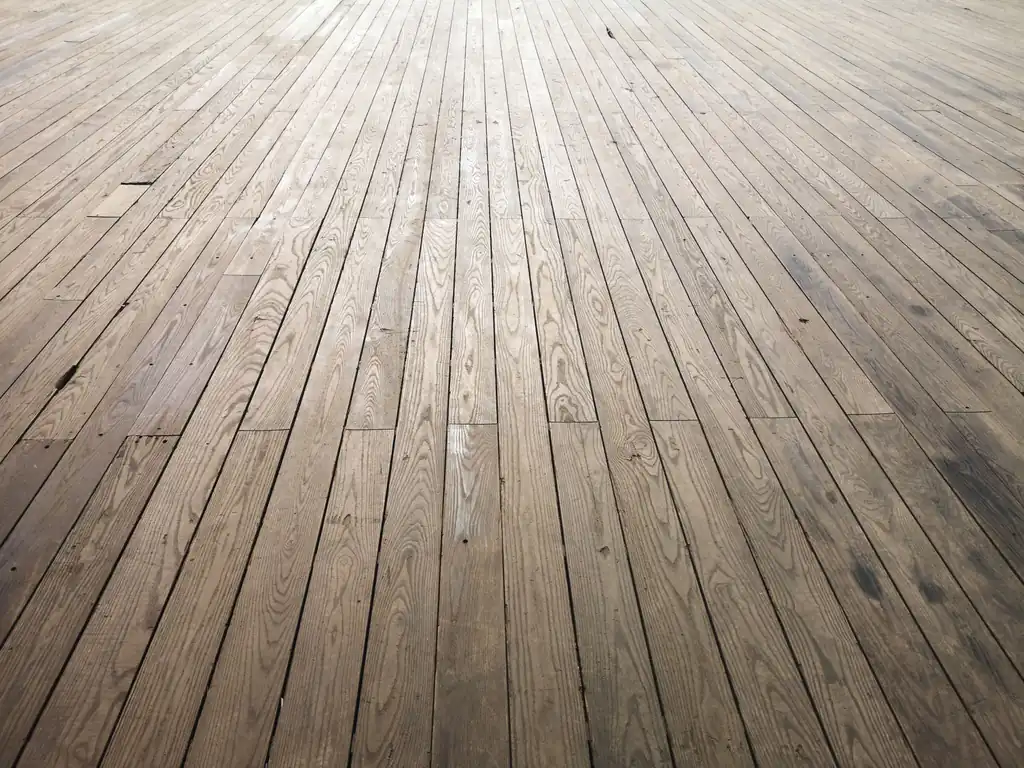
Every refinish starts with a moisture check and a written scope. The list below is what we handle on a standard job. Board replacement beyond a few planks, subfloor repair and full baseboard replacement get quoted separately so you see the cost before we start.
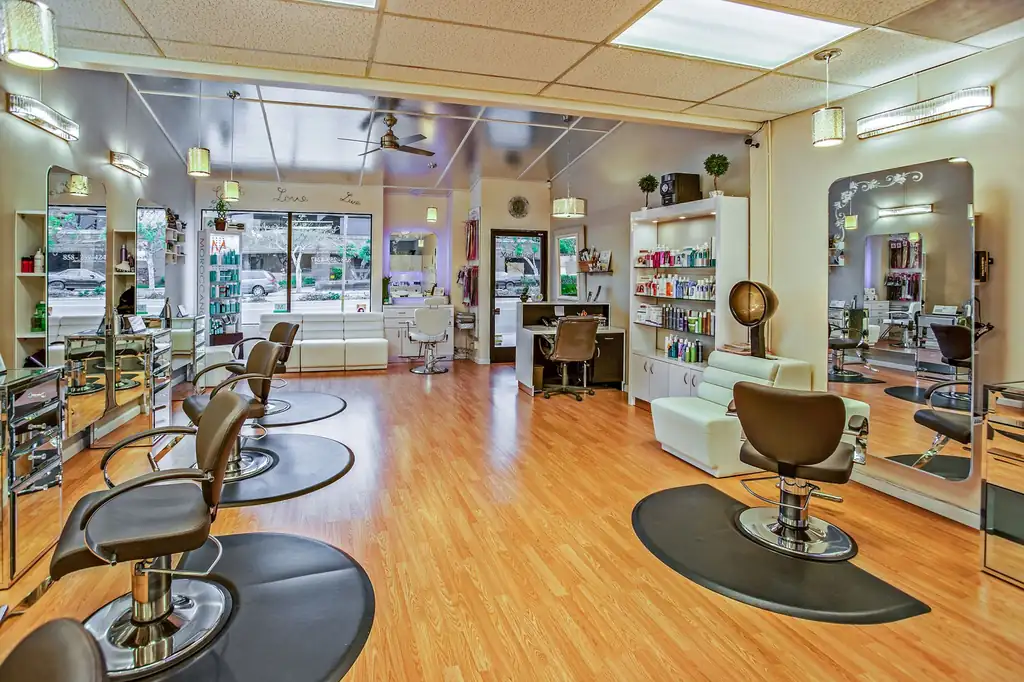
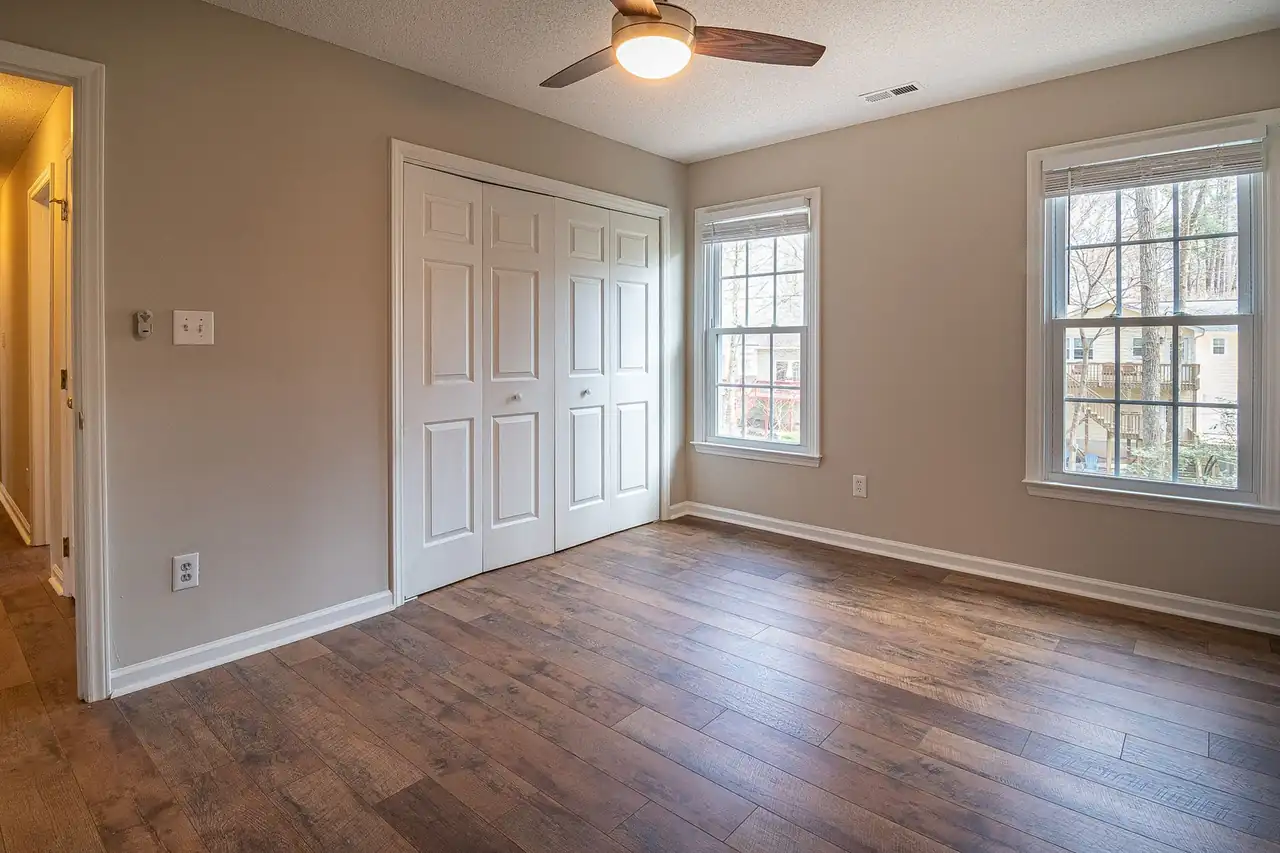
We refinish floors in lived-in homes, working room by room so you keep access to the kitchen and bathrooms. Furniture moves to one side or the garage while we sand.
We schedule commercial refinishing around your hours so the floor is ready when you open. Crews work evenings and weekends when the space is empty.
Hardwood Floor Refinishing Abilene TX is the process of sanding away the old finish, repairing damaged boards, and applying fresh stain and sealer so a worn floor reads as new again. We start with a moisture meter reading on the subfloor, then run a drum floor sander with the grain and an edger sander along the walls. Wood floor filler goes into gaps and nail holes before stain. Two to three coats of water-based polyurethane finish go on last, with a screen-and-recoat between coats.
Most Abilene homes we walk into have the same story: a finish that looked fine five years ago now shows traffic lanes down the hallway and sun fading near west-facing windows. Refinish hardwood floors in Abilene, Texas when the wear layer is still thick enough to sand, usually anything over 3/4 inch of solid red oak or white oak planks. Engineered hardwood planks can often be resurfaced once. If boards are cupping from moisture or crowning, we fix the source before the sander ever touches the floor.
We sand to bare wood, fix what is loose, and finish so the floor reads new.
Five steps, start to finish. Most single-room jobs take two to three days; whole-house jobs run four to six depending on square footage and how much repair work we find under the old finish.
We measure moisture in the subfloor and the planks with a moisture meter, check for cupping, crowning, squeaky floors and popping nails, and mark every board that needs replacement. You get a written scope and a fixed price before we move a single piece of furniture.
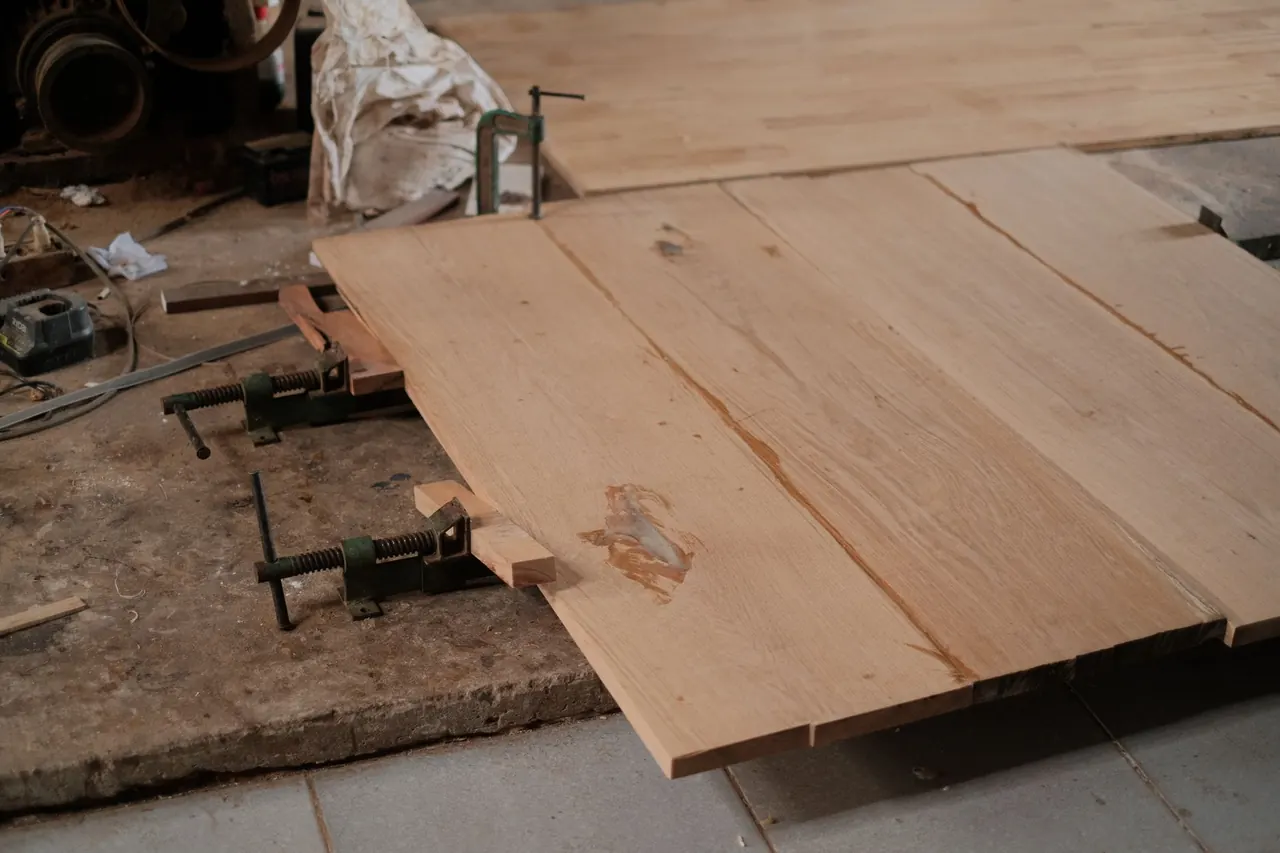
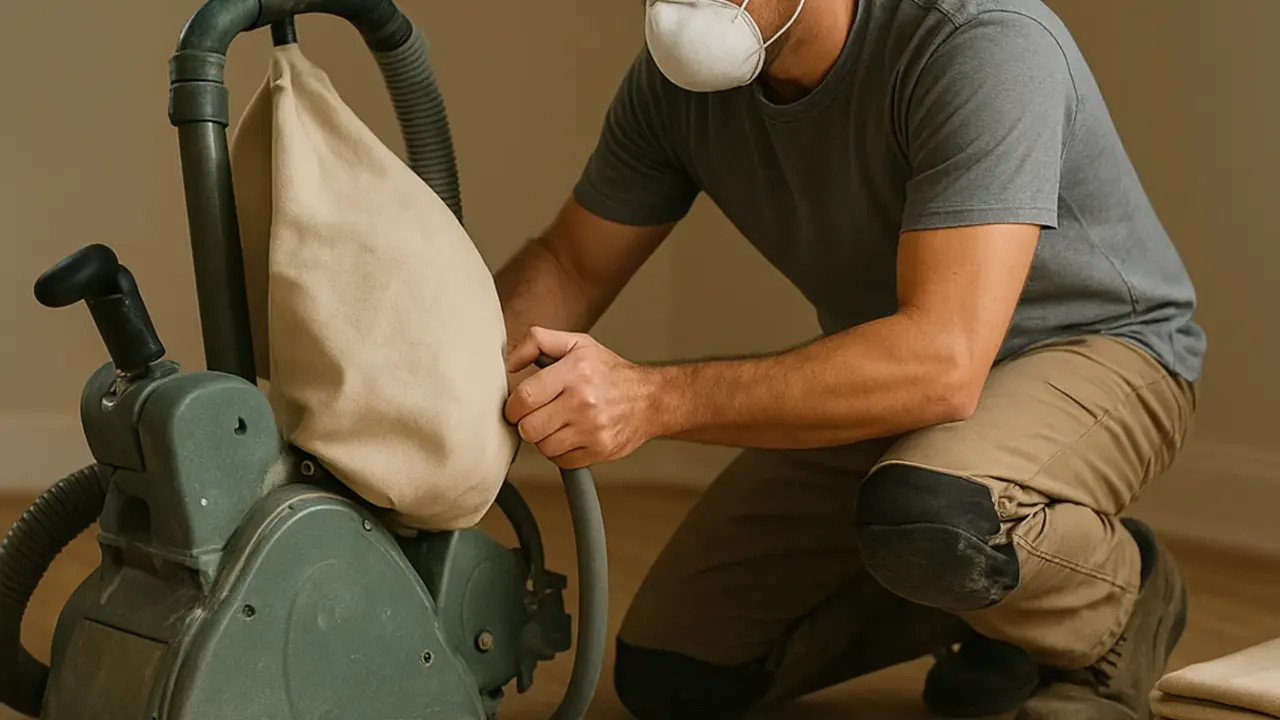
We pull baseboards where needed, set plastic barriers at doorways, and tape off cabinets and vents. The industrial floor vacuum gets connected to the sanders so dust stays contained. Furniture moves to one side of the room or to the garage, whichever you prefer.
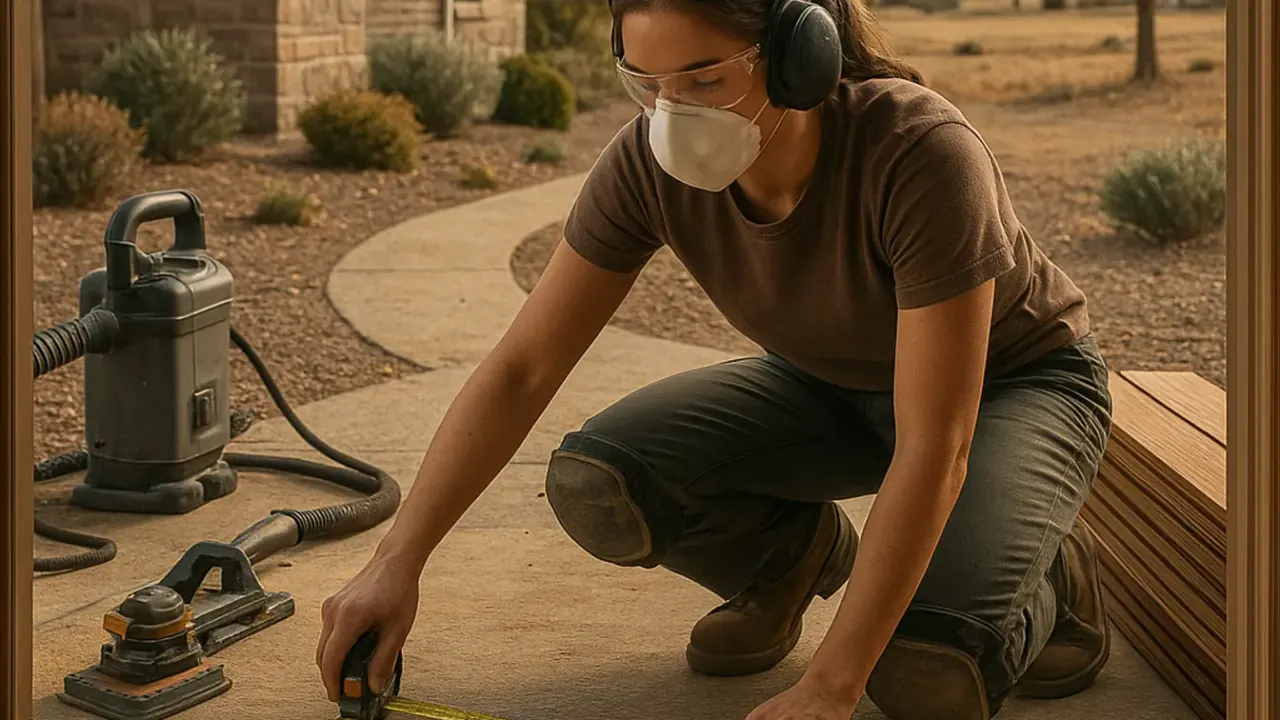
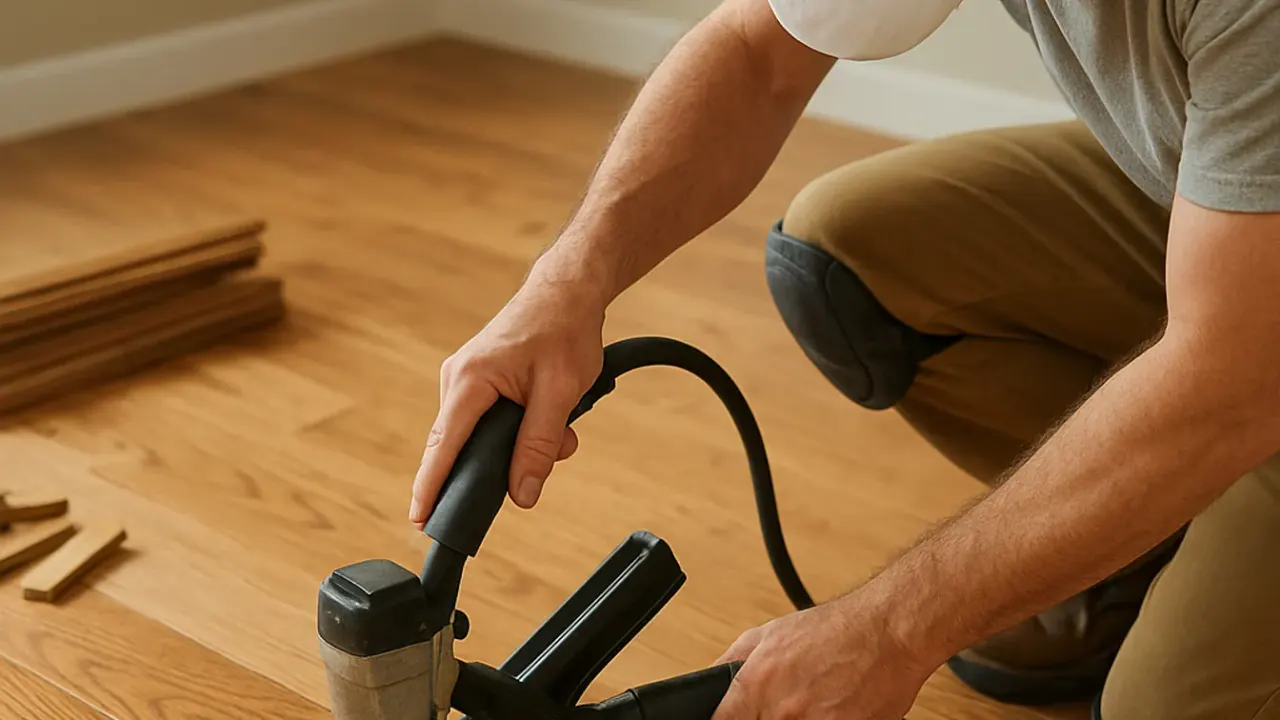
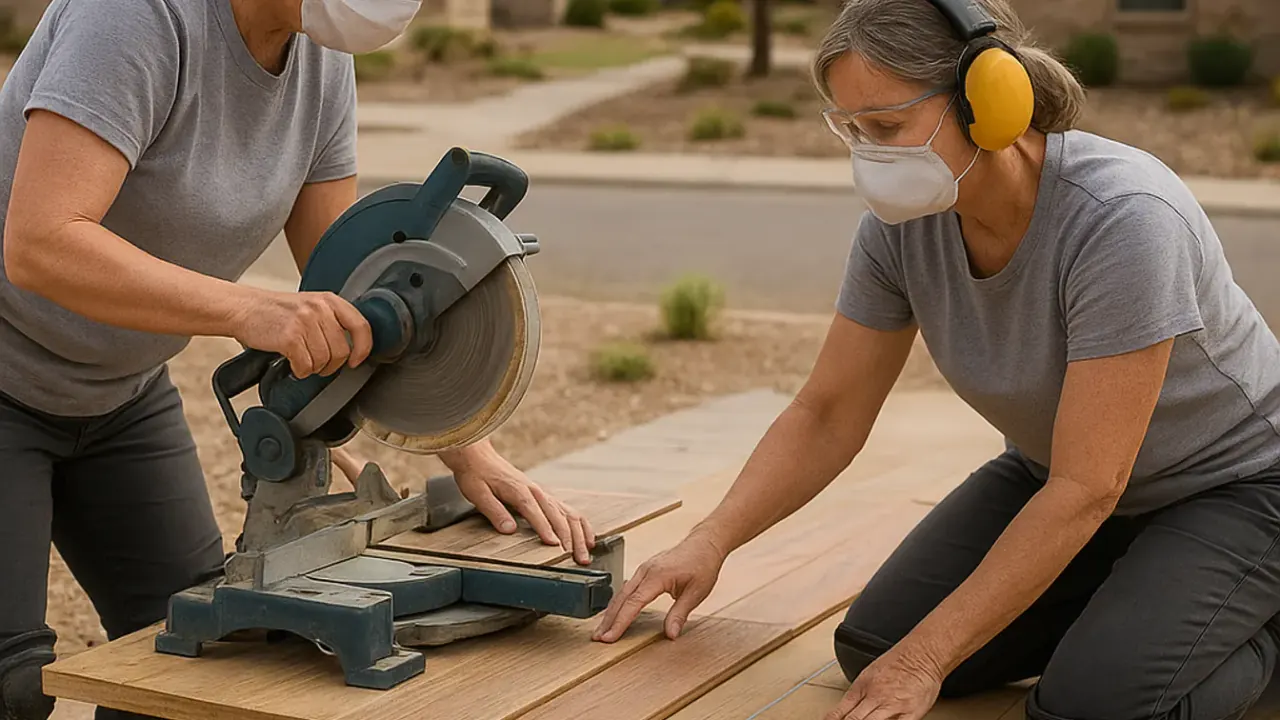
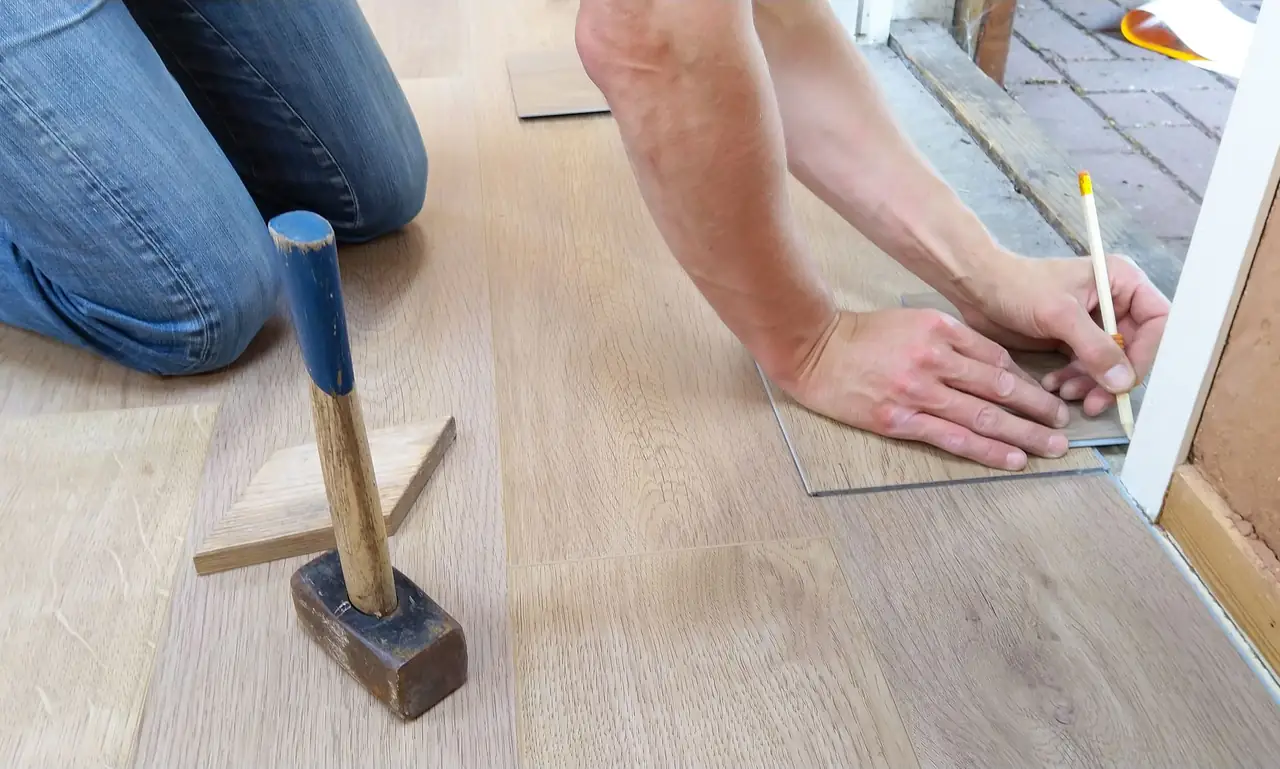
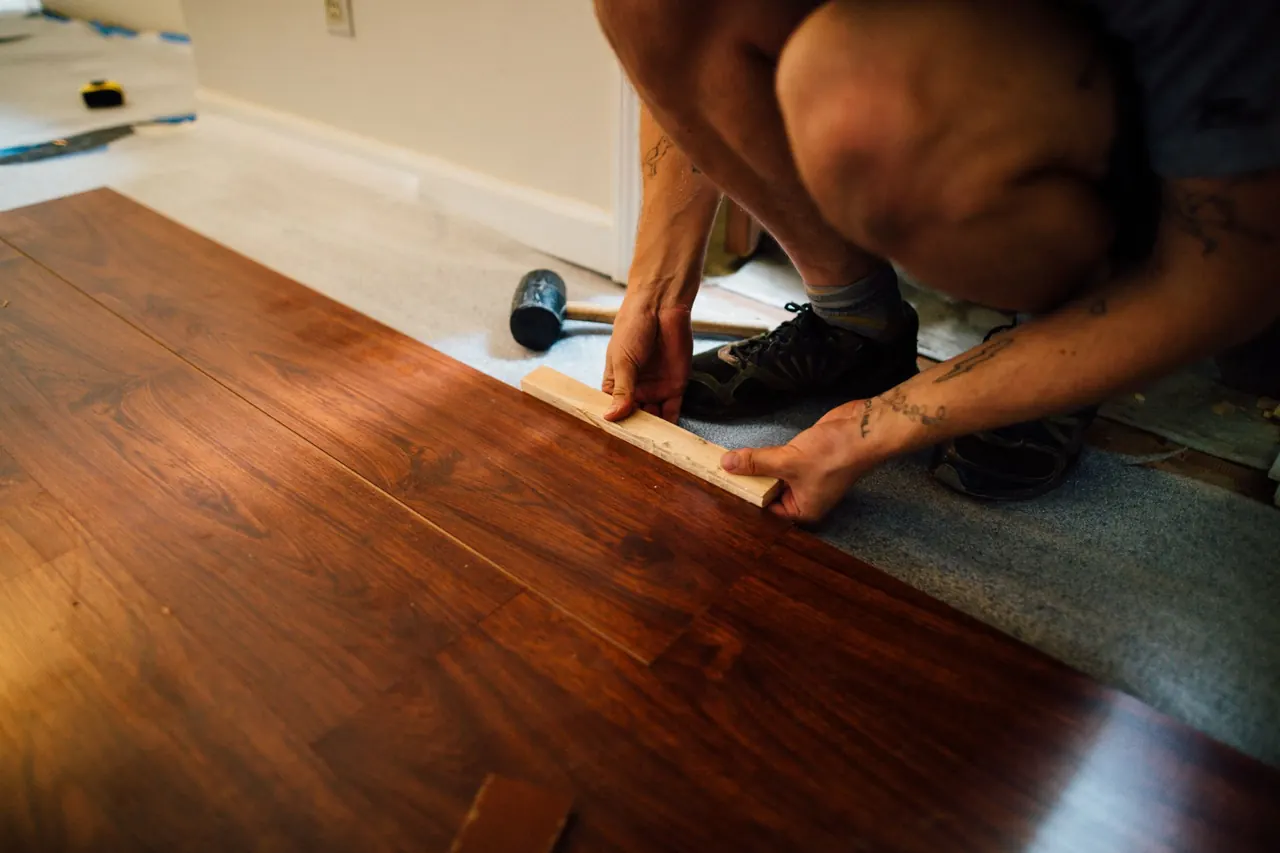
A drum floor sander takes the old finish down to bare wood, an edger sander works the perimeter, and an oscillating multi-tool gets into corners and closet returns. Loose boards get re-secured with a pneumatic flooring stapler or cleat nailer. Gaps get wood floor filler matched to the final stain.
We apply stain by hand with a buffer and lambswool pad for even color, then seal with two to three coats of water-based polyurethane finish. Each coat gets screened and vacuumed before the next. Dry time between coats runs two to four hours in normal Abilene humidity.
We walk the floor with you under raking light, flag any missed spots, and touch them up before we pack up. Light foot traffic is fine after 24 hours; rugs and heavy furniture go back after 72 hours. We leave you a care sheet with the finish brand and the recoat schedule.
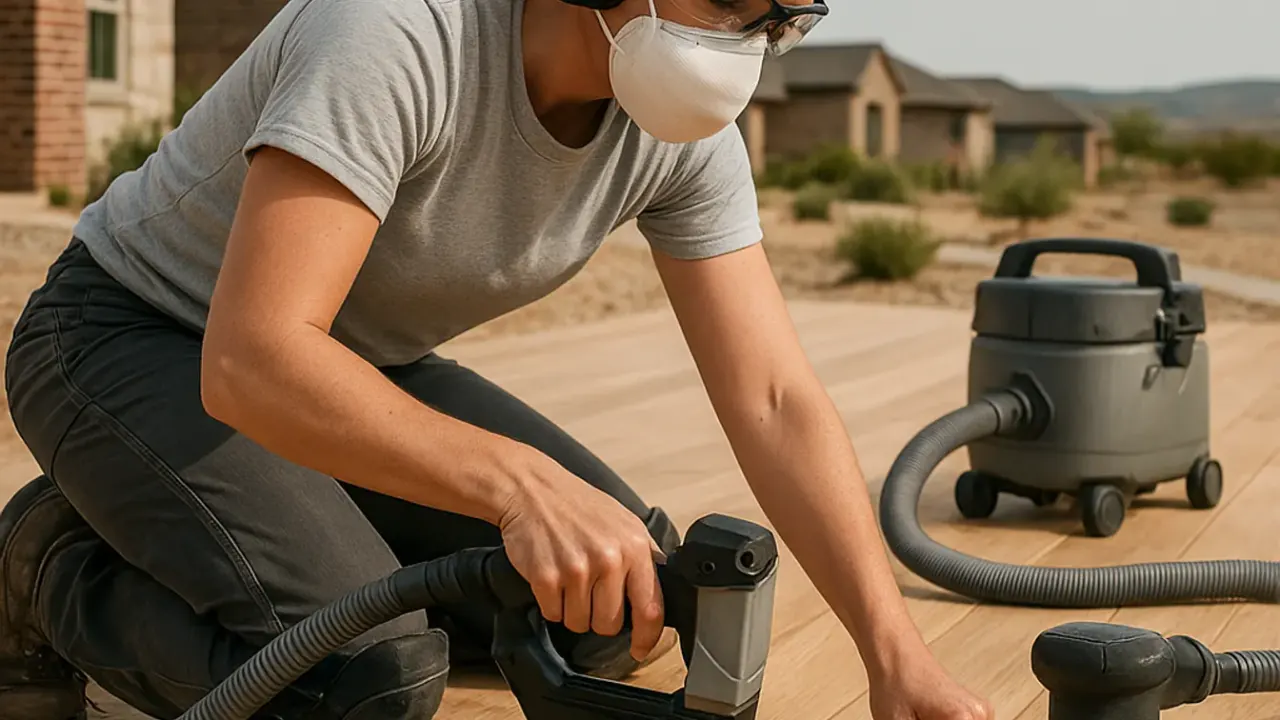
The main sanding pass. It takes the old finish and a thin layer of wood down flat and even, running with the grain so you do not see swirl marks in the final finish.
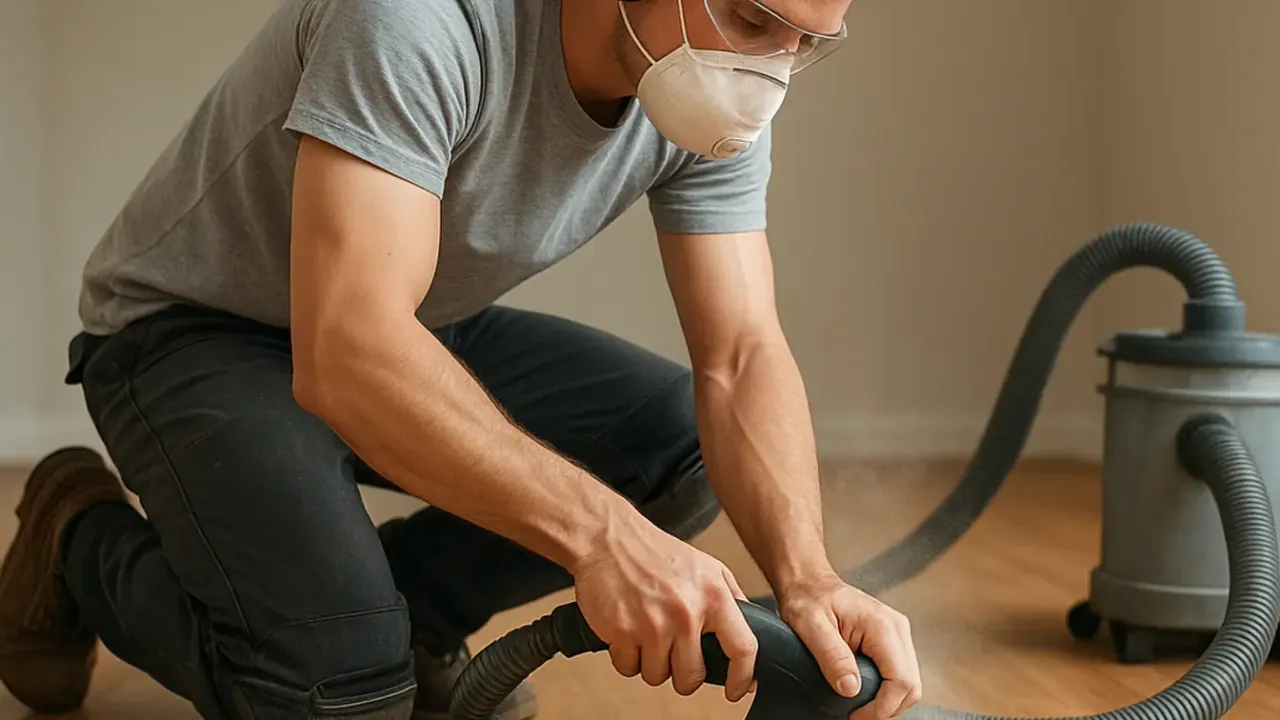
Works the perimeter where the drum cannot reach. We run it along walls, under toe kicks and into closet returns so the whole floor gets the same cut.
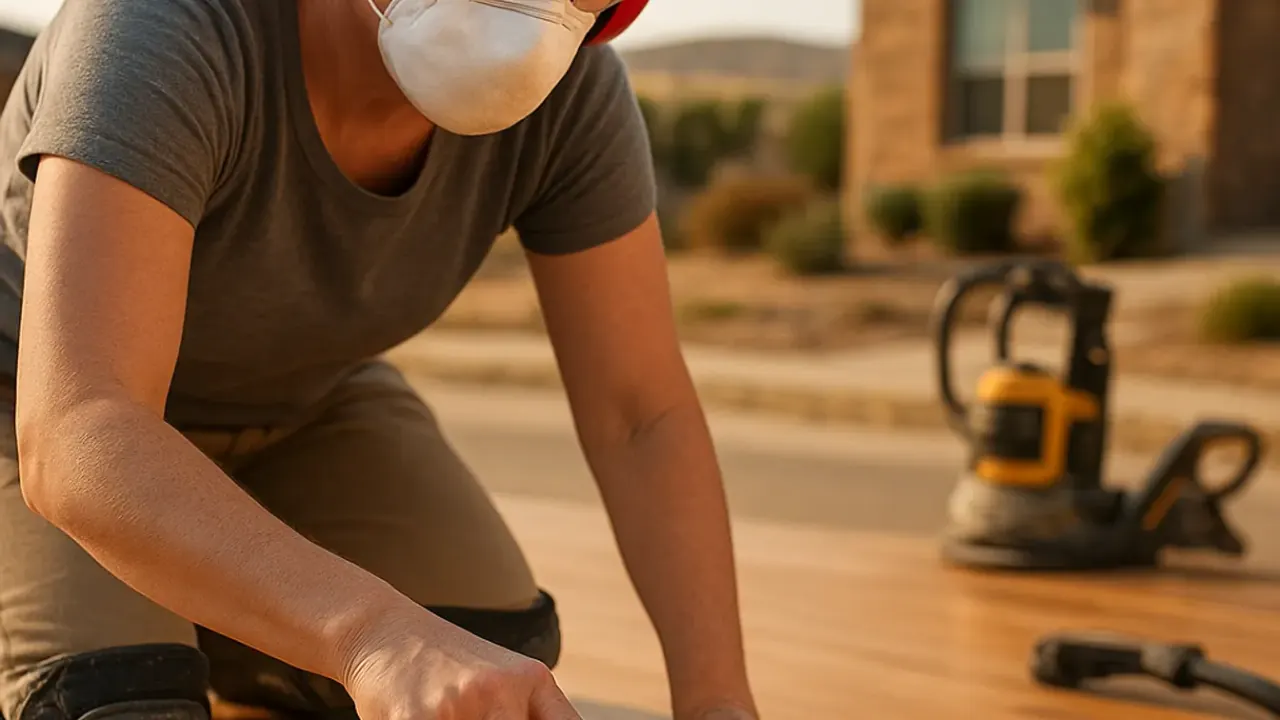
Final smoothing pass before stain. It removes the scratch pattern left by the drum and edger so the stain absorbs evenly across the room.
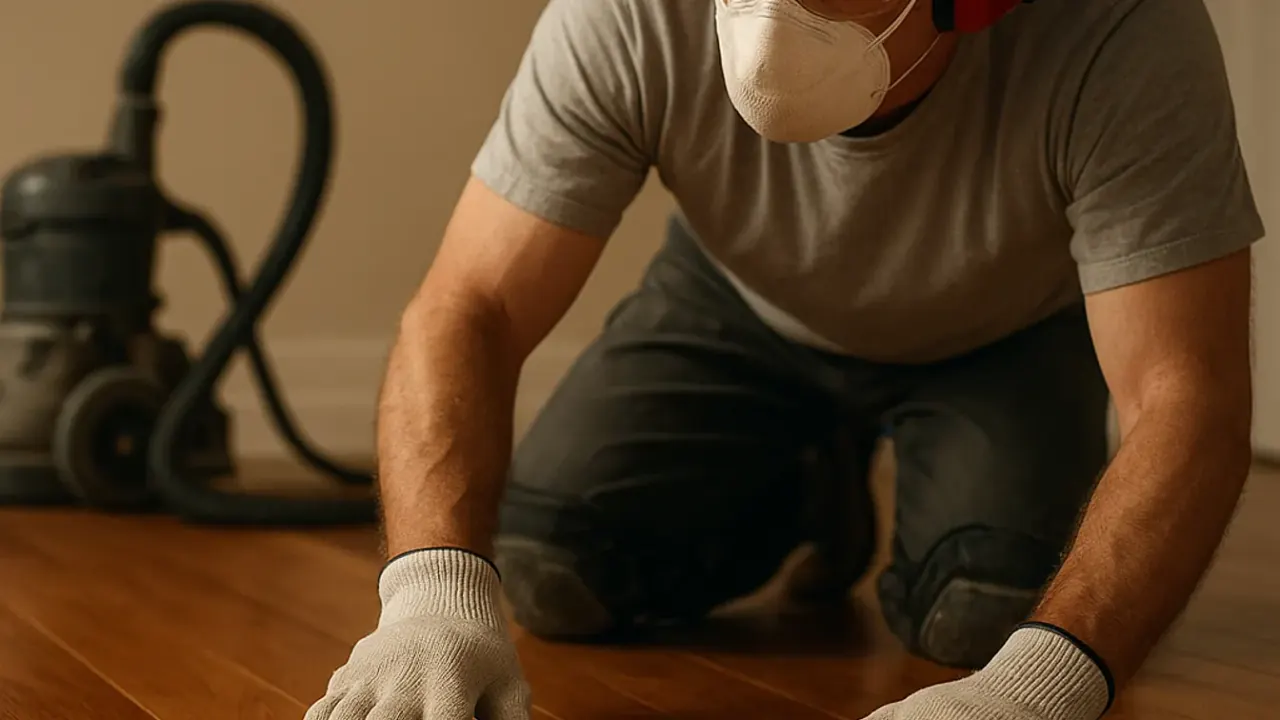
Hooked to the sanders to capture dust at the source. This is what makes our dustless setup work and keeps your HVAC and cabinets clean.
Reads moisture in the subfloor and planks before we sand. It tells us whether the wood is stable enough to finish or needs more dry time.
Re-secures loose boards and sets new planks during repairs. Powernail and Bostitch cleats hold tight and keep the floor quiet underfoot.
Gets into corners, door jambs and tight closet returns where no sander fits. It lets us undercut trim so the new finish tucks under cleanly.
We follow the National Wood Flooring Association sequence: coarse cut, fine cut, then a screen pass. Skipping steps leaves swirl marks that show up the moment stain hits the wood, so we do not skip them.
We pull carpet and tack strip, fill the staple holes, sand down to bare wood, and finish with a stain that fits the home's age. If some boards are damaged from the tack strip, we replace them and blend the repair. Original hardwood floors that match the trim and add real value at resale, usually for a fraction of new flooring.
We schedule a fast turnaround, often two to three days for the main living areas, with a neutral stain and satin finish that photographs well. We work around your showing schedule. Floors that read as new in listing photos and showings, without a full remodel timeline.
We dry the area, read moisture with a moisture meter, replace the buckled boards, and refinish the room so the repair disappears. If the subfloor is soft, we fix that before sanding. A dry, flat floor with no visible repair lines and no lingering odor from the leak.
We screen the existing finish, spot-repair deep scratches with wood floor filler, and apply fresh coats of water-based polyurethane finish. No full sand needed if the wear layer is intact. A refreshed surface that holds up to claws and cleats, done in a day or two with low odor.
Original red oak under carpet for 40 years in a Sayles Blvd Area ranch. Tack strip damage along every wall, staple holes across the field, and a grey, worn finish where the carpet pad had rubbed.
Sanded to bare wood, replaced 22 damaged boards, filled the staple holes, and finished with a medium brown DuraSeal stain and satin water-based polyurethane. The floor now matches the original trim and reads as one continuous surface.
Damp-mop with a pH-neutral cleaner once a week, keep felt pads under furniture, and plan a screen-and-recoat in about five years to keep the finish ahead of traffic wear.
Two dogs and a hallway with dark urine stains, raised grain, and a smell that lingered after cleaning. The finish was gone in the traffic lane and the stain had soaked into the tongue-and-groove seams.
Pulled and replaced 14 stained boards, sealed the subfloor, sanded the hallway and adjoining rooms, and blended the repair with a custom stain match. No visible repair line and no odor after the final coat cured.
Wipe up accidents within a few minutes, keep water bowls on a mat, and trim pet nails. A screen-and-recoat every four to five years keeps the wear layer ahead of claws.
West-facing living room in the Lytle Area with heavy UV fading, a chalky finish, and light scratches from daily traffic. The rest of the house still looked good, so a full-house sand was not needed.
Screened the existing finish, spot-filled deep scratches, and applied two fresh coats of water-based polyurethane finish with UV inhibitors. Color match to the adjoining rooms was within a shade, and the room was back in service in two days.
Close blinds during peak afternoon sun, rotate rugs twice a year so fading stays even, and recoat every four to five years to keep the UV protection working.
Most of our calls start with a floor that looks tired or feels wrong underfoot. Here are the problems we see most, what happens if you leave them, and how we handle each one.
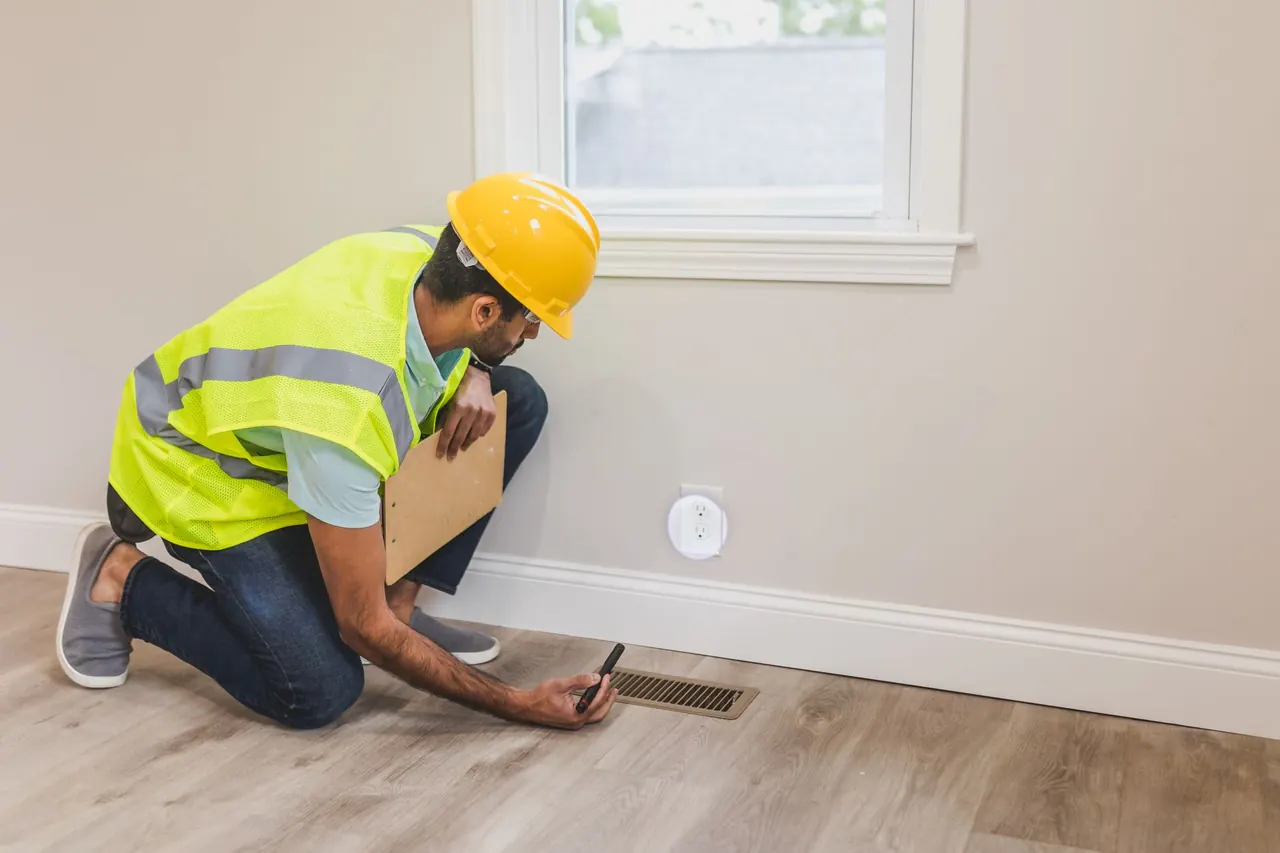
We sand the worn area back to bare wood and recoat the whole floor so the sheen matches. If the wear layer is still thick, a screen-and-recoat refreshes the surface without a full sand and saves you money. Once the finish wears through, bare wood soaks up spills and stains fast. A small worn patch turns into a full-room sanding job within a year or two.
We find the moisture source first, whether it is a crawlspace issue or a slow leak, then let the wood dry to a stable reading on the moisture meter. Only then do we sand flat and finish. Boards that cup or crown will not sand flat. If you refinish over them, the floor stays wavy and the finish cracks along the edges within a season.
We pull and replace the stained boards, seal the subfloor, and blend new planks with the existing floor. Wood floor filler and a stain match hide the repair line so you cannot tell where the damage was. Urine soaks past the finish into the wood and the subfloor. Sanding alone will not remove the dark stain or the smell, and it can bleed back through new finish.
We locate the squeak, drive new flooring cleats with a pneumatic flooring stapler, and set popping nails below the surface. The floor goes quiet before stain and sealer go down. Squeaks mean boards have worked loose from the subfloor. Left alone, the movement opens gaps and the finish cracks along the seams.
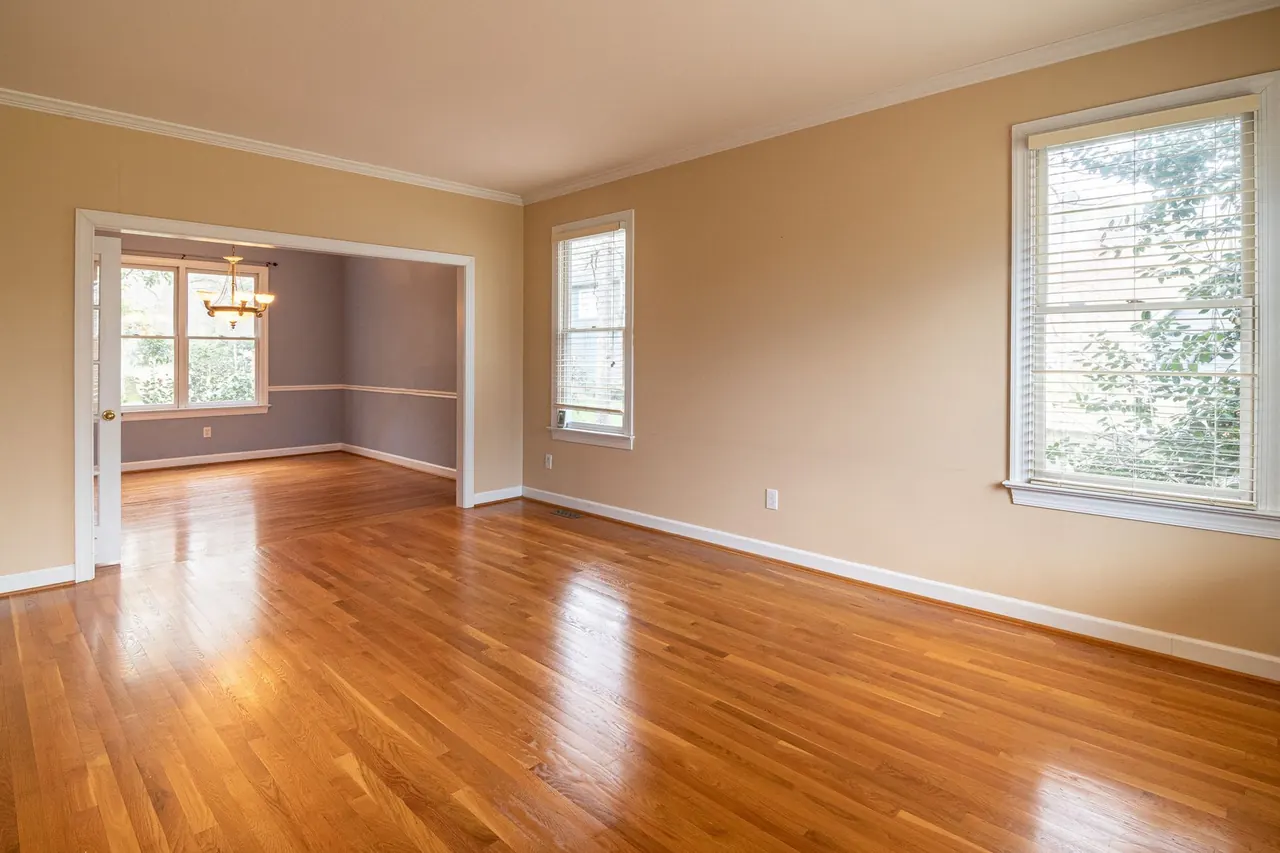
Hardwood floor refinishing cost Abilene TX runs a fraction of new flooring. You keep the same boards, the same baseboards and transition strips, and skip the tear-out and disposal fees that come with a full replacement. Most jobs land well under what new solid hardwood would cost installed.
We hook an industrial floor vacuum to the drum sander and edger sander so dust goes into a bag, not your kitchen cabinets. Dustless hardwood floor refinishing Abilene keeps furniture in the next room and keeps your HVAC return from pulling sanding dust through the house.
Hardwood floor staining and sealing Abilene TX lets you pick the tone. We test DuraSeal and Minwax stains on a spare board so you see the color under your own lighting before we commit. Matte, satin or semi-gloss finish changes how the floor reads in a bright room.
A proper sand and finish adds a fresh wear layer that stands up to kids, dogs and West Texas grit. We use Bona and Loba water-based polyurethane finish for low odor and fast cure, so most rooms are back in service within 24 hours of the final coat.
Clear records you can keep and share.
Square footage, stain and finish listed
Tested on your wood before we commit
Finish brand and recoat window
Not every worn floor needs a full sand. A screen-and-recoat refreshes the surface and costs less, but it only works when the wear layer is still thick enough.
We measure the wood above the tongue before quoting. If it is thick enough, a full sand is safe. If it is thin, we recoat instead.
A screen-and-recoat buys four to five years before a full sand. It costs about half as much and takes a day instead of three.
Boards that are buckled, moldy underneath or sanded past the wear layer get replaced. Finishing over them just hides the problem for a season.
Outside these areas? Call and ask, we may still get to you. (325) 532-0708
Most Abilene jobs run $2.50 to $5.50 per square foot in 2026, so a 500-square-foot living area lands between $1,250 and $2,750. Stain color, board repair, and whether we pull baseboards move the number. A basic sand and two coats sits at the low end; heavy water damage or pet stains push it higher.
A single room takes two to three days including dry time between coats. A whole house runs four to six days. Water-based polyurethane finish dries in two to four hours per coat, so we can stack coats in one day. You can walk on it after 24 hours and move furniture back after 72.
Often yes, if the wear layer is at least 2 millimeters thick. We measure it before quoting. Engineered hardwood planks with a thin veneer get a screen-and-recoat instead of a full sand, which refreshes the surface without cutting through to the core. If the veneer is worn through, replacement is the better call.
Most homes go seven to ten years between full refinishes, with a screen-and-recoat around year four or five. Abilene sun fading and grit tracked in from caliche driveways speed that up. If you see grey traffic lanes or feel raised grain, it is time. Solid red oak and hickory can usually take three or four sandings over their life.
Call (325) 532-0708 and we will measure your rooms, check the wear layer, and hand you a written price the same day. Free estimates across Abilene and Taylor County. We show up when we say we will.
Call us at (325) 532-0708 or send an email and we will get back to you the same business day. We schedule estimates Monday through Friday, and we can usually get to most Abilene addresses within a few days. Tell us the rooms, the square footage if you know it, and what the floor is doing.